
With so much happening across the 2026 Automate Show and Conference, building your schedule can feel like its own full-time job.
One way to simplify it: start with the people shaping the industry, and follow where they’re speaking.
This year’s lineup spans the full spectrum of automation — from AI and machine vision to humanoid robotics, large-scale deployment, and real-world implementation inside manufacturing environments.
These speakers offer different perspectives on the same question: where automation is headed, and how to apply it.
Find these powerhouses at the Automate 2026 Stage and Automate Show Theater
Join these leaders, and more, for engaging panels and sessions right on the show floor — free for all attendees, so be sure to mark your schedule.
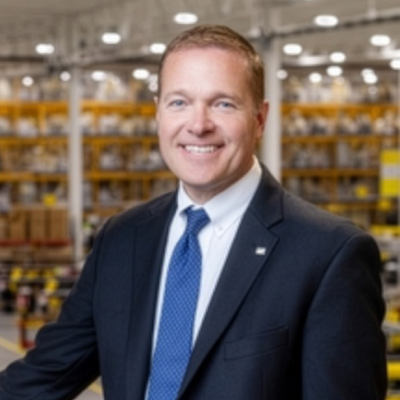
1. Mike Cicco, President & CEO of FANUC America
A practical view on scaling automation
As president and CEO of FANUC America Corporation, Mike Cicco oversees one of the largest robotics and automation providers in North and South America.
His career at FANUC spans engineering, sales, and leadership roles, giving him a front-line view of how automation is deployed across industries — from automotive to logistics and beyond.
That experience puts him close to the realities of scaling: moving from pilot programs to full production, while balancing performance, workforce considerations, and long-term ROI.
The perspective he brings:
A grounded look at what it takes to navigate growth from early adoption to enterprise-wide deployment — across systems, teams, and entire operations.
Where to find him:
- The State of the Automation Industry: Leadership Roundtable | Monday, June 22, 2026 - 9:00 AM (CDT)
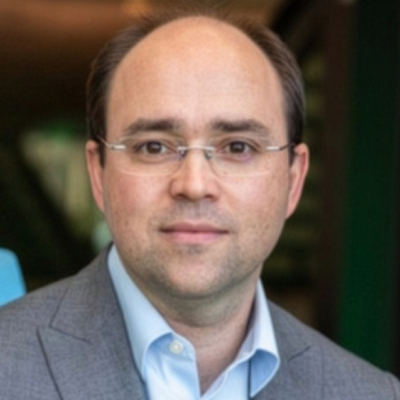
2. André Marino, Senior Vice President Industrial Automation North America, Schneider Electric
Connecting automation strategy to business impact
Andre Marino brings a strategic lens to automation — focusing on how organizations align technology investments with broader business goals.
His work centers on helping companies navigate transformation, connecting emerging technologies like robotics and AI to measurable outcomes across operations. That includes everything from improving efficiency and resilience to building more adaptable, future-ready systems.
With experience spanning leadership, strategy, and industrial innovation, Marino offers a perspective that bridges technical capability with real-world business value.
The perspective he brings:
A clear view of how to connect automation strategy to outcomes — ensuring investments translate into measurable impact across the organization.
Where to find him:
- The State of the Automation Industry: Leadership Roundtable | Monday, June 22, 2026 - 9:00 AM (CDT)
- From Complexity to Autonomy: Your Competitive Advantage | Tuesday, June 23, 2026 - 4:15 PM (CDT)
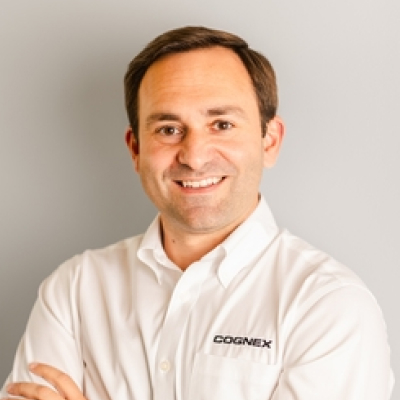
3. Matt Moschner, President & CEO of Cognex
Advancing AI-powered machine vision
As president and CEO of Cognex, Matt Moschner leads a company at the center of modern machine vision — helping manufacturers see, inspect, and verify with greater speed and accuracy.
That role puts him close to one of the biggest shifts in automation: the move from rule-based vision systems to AI-powered perception. It’s a change that’s unlocking new possibilities in inspection, quality, and traceability, especially in environments where variability once limited automation.
His background spans engineering, product innovation, and strategy, with experience across Boston Consulting Group and Boeing, along with key leadership roles at Cognex.
The perspective he brings:
A clear view of how AI is transforming quality control, inspection, and data-driven decision-making on the factory floor, and what that means for improving quality without slowing production.
Where to find him:
- The State of the Automation Industry: Leadership Roundtable | Monday, June 22, 2026 - 9:00 AM (CDT)
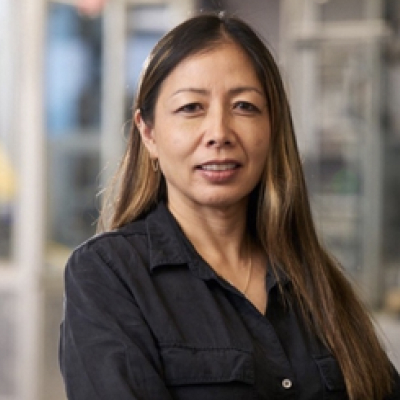
4. Wendy Tan White, CEO of Intrinsic
Rethinking how robots are built and deployed
As CEO of Intrinsic, part of Alphabet Inc., Wendy Tan White is focused on making robotics more accessible through software.
Her work sits at the center of a major shift in the industry: moving from rigid, pre-programmed systems to more adaptive, AI-driven robotics. Intrinsic’s platform is designed to simplify how robotic solutions are developed, deployed, and reused — helping teams move faster with less complexity.
Her background spans entrepreneurship, venture investment, and leadership, bringing a broad perspective on how emerging technologies move from concept to scale.
The perspective she brings:
A forward-looking view of how AI, simulation, and software platforms are lowering barriers to robotics — and what that means for scaling automation faster.
Where to find her:
- The State of the Automation Industry: Leadership Roundtable | Monday, June 22, 2026 - 9:00 AM (CDT)
- From Rigid Repetition to Adaptive Robotics: The AI Architecture for Intelligent Factories | Tuesday, June 23, 2026 - 1:45 PM (CDT)
Seek out these thought leaders at the Automate Conference
The Automate Conference delivers a more in-depth, classroom-style experience, connecting you with experts who are implementing and scaling automation every day. Registration is required. Register for the conference here.
5. Keyurkumar Gohel, Staff Mechanical Engineer (Electronics Test Automation) at Rivian and Volkswagen Group

Engineering automation inside modern manufacturing As a staff mechanical engineer focused on electronics test automation at Rivian and Volkswagen Group, Keyurkumar Gohel works directly on implementing automation within advanced manufacturing environments.
His role centers on designing and refining systems that ensure quality, reliability, and efficiency — particularly in testing and validation processes where precision is critical.
That hands-on experience provides a close view of how automation is applied at the engineering level, not just the strategy level.
The perspective he brings:
A detailed, ground-level look at how automation systems are designed, tested, and optimized inside modern production environments.
Where to find him:
- From Prototype to Production: Scalable Smart Automation for the EV and eVTOL Era | Monday, June 22, 2026 - 3:30 PM (CDT)
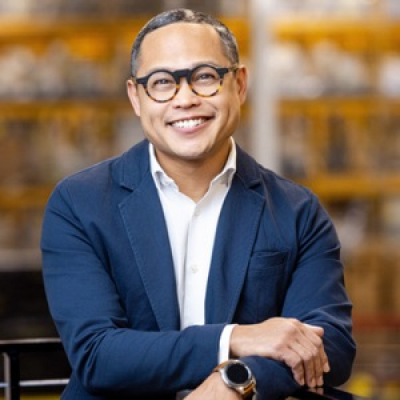
6. Jerry Perez, Business Development Manager at FANUC America
Connecting automation solutions to real applications
As a business development manager at FANUC America Corporation, Jerry Perez works at the intersection of technology and application — helping connect automation solutions to real-world use cases.
An often-overlooked part of automation is bridging the gap between what technology can do and what operations actually need. His role involves understanding customer challenges, aligning them with the right technologies, and supporting successful implementation across industries.
The perspective he brings:
A practical understanding of how to navigate technology decisions, and how automation solutions are evaluated, selected, and applied across different industries.
Where to find him:
- Collaborative Robotics in High-Mix Manufacturing Environments | Monday, June 22, 2026 - 8:00 AM (CDT)
Catch these trailblazers at the Humanoid Robot Forum
If you’re curious how humanoid robotics is moving from R&D into practical use, these sessions offer a focused look at what’s coming next. Additional registration is required. Admission to the Humanoid Robot Forum is included with an All-Access Conference Pass. See more details.
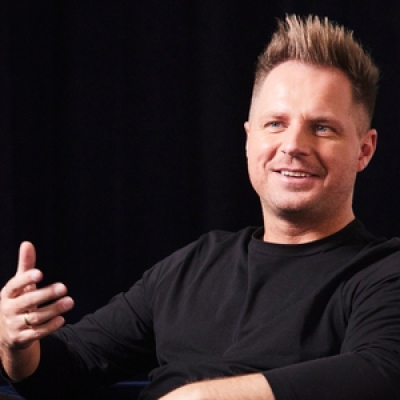
7. David Reger, Founder & CEO of NEURA Robotics
Advancing cognitive and humanoid robotics
As founder and CEO of NEURA Robotics, David Reger is focused on building cognitive robots designed to work alongside humans in dynamic environments.
His work sits at the forefront of humanoid and collaborative robotics — where intelligence, perception, and adaptability are becoming just as important as precision and repeatability. That shift is expanding where and how robots can be deployed, especially in environments that were once too complex or variable to automate.
Reger has been a strong voice in pushing robotics beyond traditional industrial use cases and into more flexible, human-centric applications.
The perspective he brings: A look at how cognitive and humanoid robotics are evolving from concept to real-world capability — and what it will take to deploy them at scale.
Where to find him:
- Humanoid Robot Forum: The Impact of Physical AI in Industrial Worlds | Tuesday, June 23, 2026 - 3:00 PM (CDT)
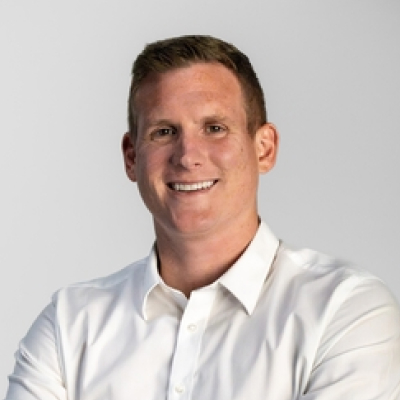
8. Jeff Cardenas, Co-founder & CEO of Apptronik
Building humanoid robots for real-world work
As co-founder and CEO of Apptronik, Jeff Cardenas is leading the development of humanoid robots designed for practical, real-world applications.
Apptronik’s approach focuses on building robots that can operate in human environments, handling tasks like material movement and repetitive labor in industries facing workforce shortages.
Cardenas brings a background in robotics commercialization, with a focus on turning advanced robotics into deployable solutions.
The perspective he brings:
A practical view of how humanoid robots are being designed and deployed for real work — not just prototypes — and where they can deliver value first.
Where to find him:
- Embodied AI: Building Intelligence for the Real World | Wednesday, June 24, 2026 - 12:35 PM (CDT)
9. Aya Durbin, Humanoid Product Manager, Boston Dynamics

Expanding what mobile robotics can do
At Boston Dynamics, Aya Durbin works on advancing robotic systems designed for mobility, inspection, and complex real-world environments.
Boston Dynamics has helped redefine what robots can do outside of fixed industrial settings — bringing mobility, autonomy, and adaptability into industries like manufacturing, logistics, and infrastructure.
Durbin’s work reflects the growing role of mobile and agile robotics in environments that demand flexibility.
The perspective she brings:
Insight into how mobile and dynamic robotic systems are expanding automation beyond fixed processes, and beyond traditional arms and cells, into more complex, real-world environments.
Where to find her:
- Why Humanoids Are the Future of Manufacturing: The Unbound Factory | Tuesday, June 23, 2026 - 1:30 PM (CDT)
Build your schedule around the right perspectives
Automation isn’t moving in just one direction, and neither is the Automate 2026 agenda.
The Automate Show Theater and conference sessions are designed to give you multiple ways to engage with the same ideas — from leadership roundtables to technical deep dives.
Following leaders like these across sessions is one of the fastest ways to connect the dots between emerging technology, practical deployment, and where automation is headed next.
Find the speakers who align with your goals. Then build out your itinerary from there. There’s so much to explore, but with a little advance planning, you can maximize your Automate experience.
« View All Blogs
 Privacy Settings