
Automate Innovation STAGE
Step into the future of automation and witness the latest innovations from leading automation companies. The stage is located at Booth 19046 and free for show registrants.
.jpg)
WITNESS THE FUTURE, TODAY.
Experience the forefront of automation with groundbreaking technologies and ingenious solutions poised to redefine industries and shape the future. Leading companies will show off their boldest ideas and revolutionary concepts on the Automate Innovation Stage, providing a dynamic platform for professionals and enthusiasts alike to stay ahead of the curve and collaborate on the future of innovation.
.jpg)
WANT TO TAKE THE STAGE?
Secure a 30-minute spotlight in our Innovation Stage to showcase your latest technology, products, or solutions. Your talk will be promoted across our website, mobile app, and marketing.
Please note: Innovation Stage speakers must be from an exhibiting company to participate
VIEW BY DAY:
Vision System Design Innovators Awards
Aaron Maassen, Associate Publisher, Visions Systems Design/EndeavorB2B
Sharon Spielman, Head of Content, Vision Systems Design/EndeavorB2B
Editor-in-Chief Sharon Spielman and Associate Publisher Aaron Maassen recognize the 2026 Vision Systems Design Innovators Awards honorees. |
|
 |
Associate Publisher Visions Systems Design/EndeavorB2B |
 |
Head of Content Vision Systems Design/EndeavorB2B |
The Augmented Operator: Driving Productivity with Machine Vision and Mobile Intelligence
Charlie Long, VP & GM Machine Vision and Fixed Industrial Scanning, Zebra Technologies
The next leap in productivity won’t come from replacing workers — it will come from empowering them. |
|
 |
VP & GM Machine Vision and Fixed Industrial Scanning Zebra Technologies |
Tech-Powered, People-Driven: The New Industrial Advantage
Jeff Angus, Vice President, Indicon, LLC
Sravan Suryadevara, Regional Director, FIRST
Greg Magdanz, Vice President, OEM Sales, Schneider Electric
What if the biggest risk facing American industry isn’t technology or competition, but our own assumptions about how work should be done? Millions of critical manufacturing jobs may go unfilled by 2030. The question is not whether industry will change, but who will be ready to lead that change |
|
 |
Vice President Indicon, LLC |
 |
Regional Director FIRST |
 |
Vice President, OEM Sales Schneider Electric |
To Automate or Not to Automate
Greg Meyne, VP, Consulting, enVista
Automation is critical to tackle labor?challenges and increase throughput to improve speed to market. In this session, learn how organizations are leveraging automated solutions including goods to person systems, autonomous mobile robotics and other automation solutions to improve fulfillment?efficiencies and throughput. Our automation and?facility design experts will help you determine if automation is right for your operations and the key ways automation can benefit your company.?
|
|
 |
VP, Consulting enVista |
Open Up the Future
Eben Shelton, Sales Specialist, Motion Control and CNC Systems, Siemens
Kevin Wu, Portfolio Sales Enablement Manager for Motion Controllers, I/Os, and Roboti, Siemens
Machine builders are facing unprecedented challenges: rising machine complexity, increasing demands for flexibility and automation, stricter regulations — from sustainability to cybersecurity and safety—and ever-shorter time-to-market. Traditional, siloed engineering approaches are no longer sufficient to stay competitive. |
|
 |
Sales Specialist, Motion Control and CNC Systems Siemens |
 |
Portfolio Sales Enablement Manager for Motion Controllers, I/Os, and Roboti Siemens |
Physical AI at Production Scale: FANUC’s New Open Interfaces Enable Real Time AI-Driven Robot Motion
David Bruce, Engineering Manager, FANUC America
AI in manufacturing is accelerating rapidly, but real progress depends on giving AI systems precise, safe, real time control over physical robots. In this session, FANUC reveals its new generation of open interfaces: Python on the robot controller, ROS 2 connectivity and high frequency (1 kHz) streaming motion that dramatically expand what developers can build with FANUC robots. These new capabilities bridge the gap between digital intelligence and physical action by enabling sensor guided motion, AI driven decision-making and real time motion adjustments with minimal delay. Attendees will learn how mainstream developers can now program FANUC robots using familiar tools such as Python, Microsoft’s Visual Studio Code and modern open source frameworks. The session includes demonstrations of AI guided motion, integrations with 3D vision systems and examples of how customers are applying these tools today. Whether you build automation, integrate AI systems or develop robotic applications, this session provides a practical blueprint for turning AI insights into safe, production ready robot behavior. |
|
 |
Engineering Manager FANUC America |
AI-Enhanced Virtual Twins for Automotive Production Lines
Luciano Mancini, World Wide DELMIA Industry Process Senior Expert, Dassault Systèmes
Virtual twins of automotive production lines have long supported the design and validation of robotic manufacturing systems. Built on the 3DEXPERIENCE platform with DELMIA Robotics, these virtual twins provide a connected digital thread and single source of truth, enabling teams to capture and reuse manufacturing knowledge and know-how while improving consistency across programs. |
|
 |
World Wide DELMIA Industry Process Senior Expert Dassault Systèmes |
Start with Standard
Maik Peters, CEO, PITCO Engineering
SMB Manufacturers feel the need to automate, but many don't know where to start. Hardware and software standardization will lead to faster, better, and more cost-efficient automation solutions. In this presentation, we will demonstrate how our new Standard Framework and AI-powered Engineering Solution will significantly reduce engineering costs and, consequently, the cost of custom automation solutions. |
|
 |
CEO PITCO Engineering |
Transforming Simulation at the Speed of AI: From Generative Design to Operations
Martin Husek, Lead Applied AI Engineer, Ansys, part of Synopsys
The Ansys part of Synopsys will explore how simulation is evolving in the era of physical AI to support the next generation of robotics and automation systems. |
|
 |
Lead Applied AI Engineer Ansys, part of Synopsys |
Drive to Motor: Connectivity Guidance
Raj Desai, Global Product Manger - Drives, Lapp
The session aims to deliver practical, on-the-floor guidance for installing connectivity between drives and motors. It will address common challenges associated with using VFD and SERVO drives, along with effective solutions to overcome these issues. The discussion will focus on Pulse Width Modulation (PWM), highlighting its advantages and limitations. Additionally, the session will provide cable and installation recommendations to minimize downtime and ensure system reliability. LAPP's innovative automation solutions will also be presented to support seamless connectivity and optimized performance. |
|
 |
Global Product Manger - Drives Lapp |
From Tribal Knowledge to AI-Guided Execution: The Future of Manufacturing Operations
Rutherford Wilson, Chief Product Officer, MachineMetrics
You've invested in automation. Your machines are generating more data than ever. So why are operators still guessing, planners still firefighting, and production still falling short of its potential? |
|
 |
Chief Product Officer MachineMetrics |
The Future of Sortation: Flexible, Reconfigurable Systems That Reduce CapEx and Operating Costs While Increasing Throughput
Nate Rosier, Chief Customer Officer, enVista
As warehouses face rising throughput demands and increasingly dynamic order profiles, traditional, rigid sortation systems are no longer meeting expectations. In this session, enVista’s warehousing experts will explore why legacy, fixed-path sorters limit growth and how emerging Autonomous Magnetic Platform (AMP) technology is adapting to warehouse environments with rapid operational change. |
|
.jpg) |
Chief Customer Officer enVista |
Safety and Security Innovations for Drive Systems in Motion Control Applications
Craig Nelson, Portfolio Sales Enablement Manager, High-Performance Drive Systems, Siemens
Drive systems are widespread in automation, robotics, and industrial manufacturing, where safety and security are increasingly becoming critical components. Recent innovations focus on advanced protection of both operators and equipment while ensuring uninterrupted production from threats. |
|
 |
Portfolio Sales Enablement Manager, High-Performance Drive Systems Siemens |
Accelerate Everything: Open, Software-Defined Automation
Todd Elliott, Chief Operating Officer, TECZZ Solutions
Fabrice Meunier, VP, Industrial End Users and System Integrators, Schneider Electric
The next breakthroughs in industrial operations are being driven not by hardware, but by software. This session will show how shifting from closed, hardware-bound systems to open, software-defined automation unlocks a level of speed, flexibility, and innovation that was simply not possible before. |
|
 |
Chief Operating Officer TECZZ Solutions |
 |
VP, Industrial End Users and System Integrators Schneider Electric |
Introducing ZeroMag: Your First Electrostatic Motor
Matt Maroon, CEO, C-Motive Technologies
C-Motive, located near Madison, Wisconsin, originated from research conducted at the University of Wisconsin–Madison. The company's co-founders based their foundational research on Benjamin Franklin's early work with electrostatic motors, a technology that existed nearly 75 years before electromagnetic motors. Today marks the official launch of C-Motive's first product, ZeroMag - these motors achieve high efficiency while maintaining a compact, modular design with high torque density. ZeroMag motors remove the need for conventional cooling systems or gearboxes, reducing efficiency losses and minimizing maintenance requirements. |
|
 |
CEO C-Motive Technologies |
From Smart Cameras to Scalable AI Vision: Unlocking the Future of Industrial Inspection
Michael Chee, Senior Manager, Vision Products, Cognex
AI is transforming manufacturing by making automation smarter, more adaptive and easier to scale. This presentation explorers how Cognex Edge AI brings intelligence directly to the point of inspection, allowing users to train powerful models from a small set of example images without specialized expertise. Then, building on this foundation, Cognex Advanced AI with OneVision enables manufactures to tackle more sophiscated challenges and scale vision scross global operations - resulting in faster deployment, consistent quality and a connected, scalable vision infrastructure. |
|
 |
Senior Manager, Vision Products Cognex |
Beyond the Algorithm: Standardized Manufacturing Data Models as the Foundation for Scalable Industrial AI
John Rinaldi, CEO, Real Time Automation
Artificial Intelligence is often heralded as the "brain" of the modern factory, promising breakthroughs in predictive maintenance, quality control, and autonomous robotics. However, a brain is only as good as the neural pathways that feed it. Most manufacturers inherit decades of implicit tag naming, inconsistent units, and undocumented context that cause AI models to drift, misinterpret values, or fail at scale. |
|
 |
CEO Real Time Automation |
The Fast Automation Roadmap: Scaling with Standardized Cobot Solutions
Jerry Perez, Business Development Manager, FANUC America
In the race to automate, the "custom-built" trap is the primary speed bump. While bespoke engineering has its place, the future of competitive manufacturing lies in standardization. For customers, integrators, and OEMs alike, the transition from "one-off" projects to repeatable, modular cobot solutions is the secret to slashing deployment timelines and maximizing ROI. |
|
 |
Business Development Manager FANUC America |
Enhanced Manufacturing Efficiency Powered by Hybrid Digital Twins
Vitor Lopes Pereira, Manager - Digital Twins, Ansys, part of Synopsys
Most companies in the manufacturing industry are undergoing some level of transformational initiatives to increase operational efficiencies and streamline sustainability targets. Given the exponential advancements in digital technologies in the past decade, most companies have kicked-off digital transformation initiatives as a key strategic pillar to revamp the industry and address current and future market needs. This includes developing, evaluating, defining, modifying, training, and executing new operational practices. Digital Twins have emerged as a key enabling technology to fulfill these goals. |
|
 |
Manager - Digital Twins Ansys, part of Synopsys |
Digitizing the Floor: How Data Drives Better Dough Production
Paul Galeski, CEO, GrayMatter
Billy Taylor, Sr. Director, Engineering & Technical Procurement, Papa Johns
Critical manufacturing data is too often recorded manually, on paper. |
|
 |
CEO GrayMatter |
 |
Sr. Director, Engineering & Technical Procurement Papa Johns |
Expanding the Limits of Embedded Machine Vision
Mike MacDonald, Senior Manager, Product Management, Cognex
AI is reshaping what's possible in industrial machine vision — but getting it to work reliably on the factory floor is a different challenge entirely. Unlike consumer applications, industrial machine vision requires high accuracy on every run, millisecond cycle times, and scalable deployment across many production lines and sites. Achieving that level of performance typically means choosing between model capability and simplified embedded deployment: larger, more accurate AI models demand compute that simply doesn't fit inside a smart camera system. |
|
 |
Senior Manager, Product Management Cognex |
Self-Serve Automation: How item Digitaltools Accelerate Design, Quoting, and Deployment
Ben Hull, Director of Sales, item America
Engineering teams today are under constant pressure to move faster — design faster, quote faster, build faster. Yet many projects are still slowed down by disconnected tools, manual CAD work, revision cycles, and procurement bottlenecks.
If you’re looking to shorten sales cycles, reduce engineering bottlenecks, or empower your teams with smarter digital tools, this session will show you how connected engineering platforms are redefining speed and simplicity in automation. |
|
 |
Director of Sales item America |
mot.OS® in Action: How an Intelligent Fleet Manager Transforms Mobile Automation Performance
Darren O'Reilly, Senior Director of Software and Technology, Formova
Nicola Tomatis, CEO, BlueBotics
As Automated Guided Vehicle (AGV) fleets expand in scale, complexity, and operational responsibility, the fleet manager has become the central driver of system safety, efficiency, and long term scalability. This Innovation Stage session will introduce mot.OS®, a next generation fleet management platform designed to serve as the intelligence layer behind advanced mobile automation systems.
This session will provide a forward looking view of how AGV fleet intelligence is evolving and why the fleet manager has become a foundational element of high performance automated operations. |
|
 |
Senior Director of Software and Technology Formova |
 |
CEO BlueBotics |
Manufacturing-Native AI: How Industry Specific Models and Agents Are Transforming the Factory System Landscape
Angelo Stracquatanio, CEO & Co-Founder, Apprentice.io
AI is rapidly entering manufacturing, but most implementations rely on general-purpose models trained on the internet—systems that lack the domain knowledge required to operate inside real production environments. |
|
 |
CEO & Co-Founder Apprentice.io |
OEE Meets SPC: Automating Data Collection for Real-Time Process Improvement
Josh Goodman, Product Marketing Manager, Minitab
At Automate 2026, automation leaders will be talking a lot about robots, vision systems, and AI. This session zooms in on a less glamorous, more profitable truth: if your plant can’t see what’s happening in real time, it can’t reliably control it. |
|
 |
Product Marketing Manager Minitab |
How Machine Vision and Physical AI Facilitate Human Centric Manufacturing
Sadiq Panjwani, Chief Operating Officer and Senior Executive Vice President, Teledyne Technologies
Manufacturing is rapidly evolving with a growing skills gap, increased automation, and more complex systems. In this session, Sadiq Panjwani will explore how machine vision and physical AI such as robots and edge intelligence are enabling a more human centric future of manufacturing. The presentation will draw on real world examples from advanced manufacturing environments and discuss 3D vision, thermal / LWIR (long wave infrared) and SWIR (short wave infrared) imaging, and advanced software systems that are augmenting workers by reducing repetitive tasks, accelerating on the job learning, and improving safety and productivity. |
|
 |
Chief Operating Officer and Senior Executive Vice President Teledyne Technologies |
Camera + Radar Sensor Fusion: A Practical Path to Robust, Scalable 3D Perception
Sam Palmisano, Vice President, Product, Robotics & Drones, Aptiv
The next wave of robotics won’t be defined by sensing performance alone, but by what can scale in the real world at the right cost. |
|
 |
Vice President, Product, Robotics & Drones Aptiv |
Physical AI with Human Touch
Alexander Schmitz, CEO, XELA Robotics
XELA’s tactile system combines uSkin sensors and uAi software to help robots understand what they touch. Each uSkin sensing point measures pressure and shear forces. The data can be processed by uAi to visualize it, detect contact points, and record tactile data in real time. |
|
 |
CEO XELA Robotics |
From Reactive Maintenance to Continuously Optimized Manufacturing Operations
Scott Campbell, Asset Lifecycle Management Product Success Leader, IBM
Many manufacturers still operate in reactive cycles, responding to breakdowns, expediting parts, and disrupting production schedules to recover from preventable failures. This firefighting approach drives unnecessary downtime, inflates maintenance costs, and limits the ability to consistently improve OEE and plant performance. In this session, IBM will demonstrate how IBM Maximo Application Suite enables manufacturers to move beyond reactive maintenance toward continuously optimized operations. By combining predictive and condition-based maintenance, AI-driven asset performance insights, and intelligent work planning, Maximo helps teams prioritize work based on business impact, align maintenance with production constraints, and proactively prevent failures before they occur. Attendees will learn practical strategies to transform maintenance into a strategic driver of reliability, efficiency, and sustained manufacturing excellence. |
|
 |
Asset Lifecycle Management Product Success Leader IBM |
1 Minute. 5 Images. AI Vision Inspection Go Live on the Same Day.
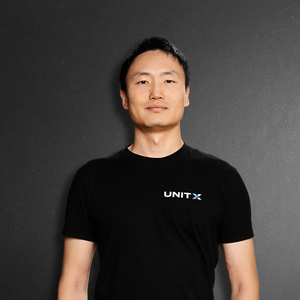
Keven Wang, CEO, UnitX Inc
Setting up an AI vision camera shouldn't take weeks — but for most manufacturers, it still does. In this session, UnitX CEO Keven introduces the UnitX Smart Camera and demonstrates live that enterprise-grade AI inspection can be deployed in under 60 seconds, trained from as few as 5 images, and go live in production the same day. UnitX walks through the full inspection picture: how in-process smart camera deployment catches defects at the source before costs compound, and how UnitX's end-of-line Visual Inspection System handles the deepest, most complex surface inspection challenges. Real customer results from automotive and battery manufacturing show what happens when the barrier to vision adoption is removed entirely, and what that means for yield, OEE, and the bottom line. |
|
 |
CEO UnitX Inc |
 Privacy Settings