
Humanoid Robots Enter BMW’s Leipzig Plant: DH-ROBOTICS Electric Grippers Power Real Industrial Operations
DH-ROBOTICS Electric Grippers Power Real Industrial Operations
Recently, BMW announced that its Leipzig Plant in Germany has begun testing humanoid robots in real production environments for the first time. This marks the first deployment of humanoid robots in a BMW factory in Europe, representing a new step toward integrating advanced robotics into automotive manufacturing.
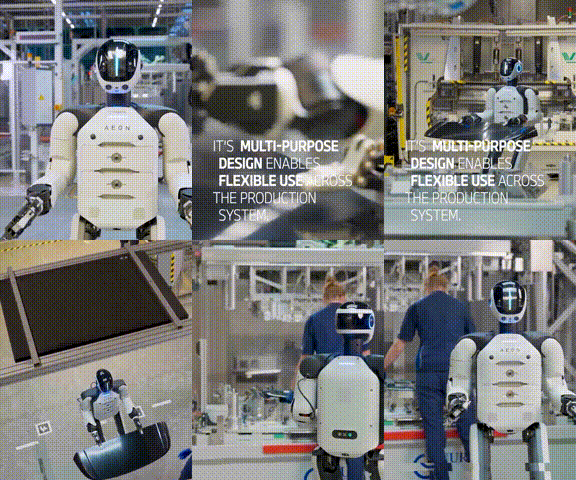
In this pilot program, DH-ROBOTICS AG Series Electric Grippers are installed on the AEON humanoid robot humanoid robot developed by Hexagon Robotics from Sweden. Acting as the robot’s end-of-arm tooling, the grippers perform critical operational tasks in battery assembly and component manufacturing.
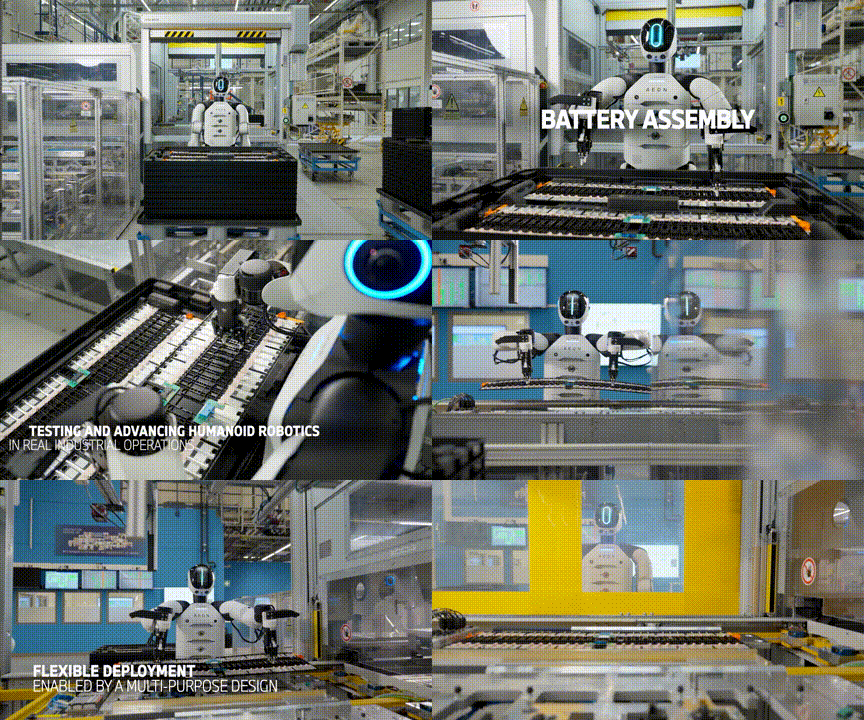
Currently, the AEON humanoid robot equipped with DH-ROBOTICS AG Series electric grippers is undergoing testing at BMW’s Leipzig facility, focusing on validating the adaptability of humanoid robots across various production environments.
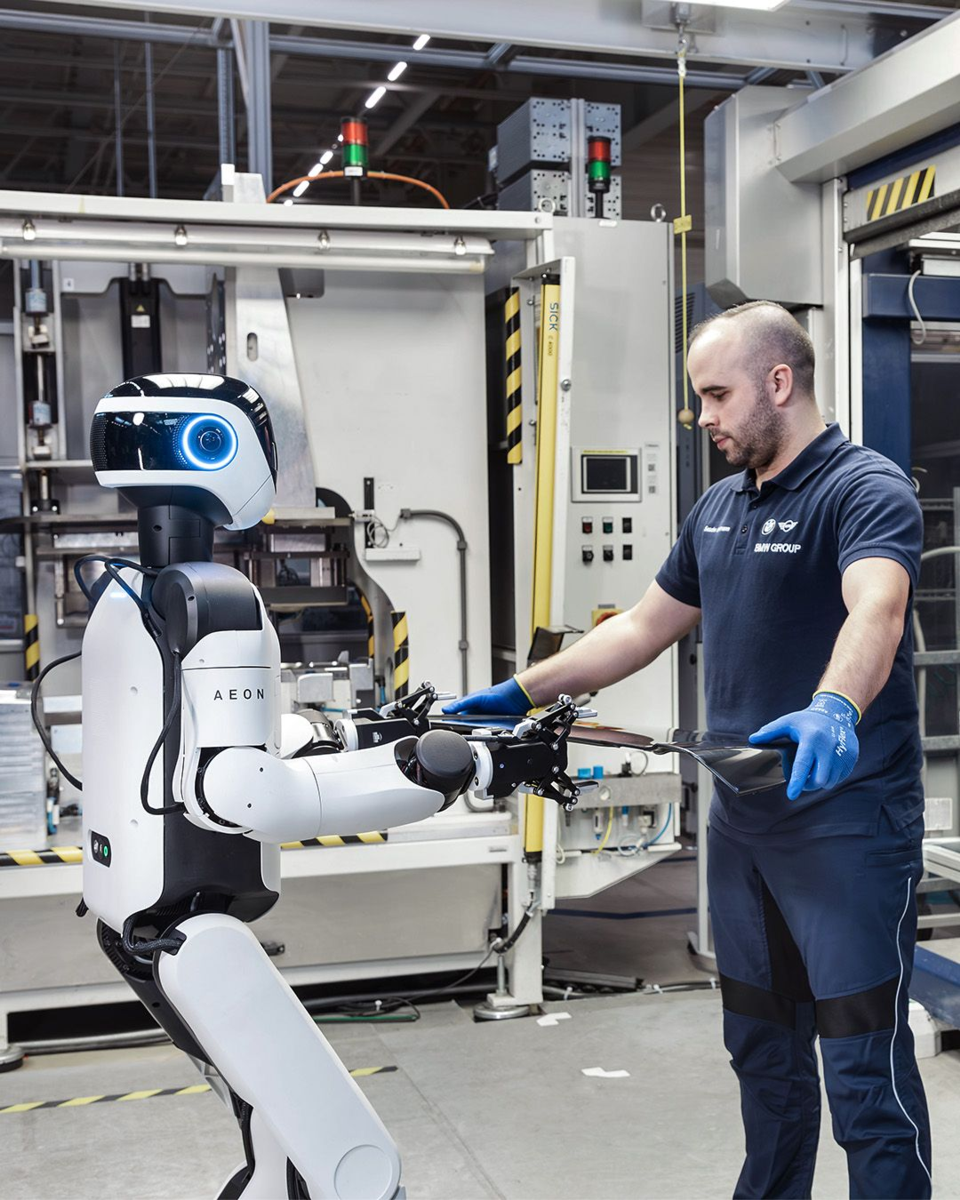
BMW considers this project part of its iFACTORY digital transformation strategy and an important real-world application of Physical AI in industrial environments.
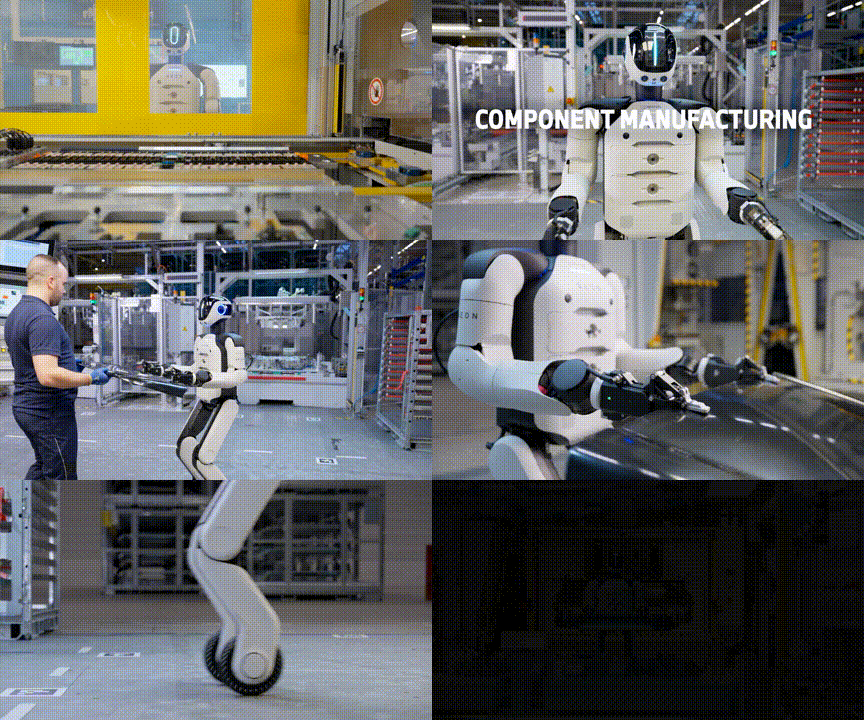
Humanoid Robots Begin Real Industrial Validation in Europe
This deployment signals a new phase where humanoid robots are undergoing rigorous validation within Europe’s automotive manufacturing ecosystem.
While robotics innovation has long focused on mobility and perception, real industrial adoption depends heavily on the reliability of manipulation and execution capabilities.
Industrial-Grade End-Effector Capabilities
DH-ROBOTICS
In industrial environments, humanoid robots must perform more than movement or positioning—they must execute precise, stable, and repeatable operations. The reliability of the end effector directly determines whether humanoid robots can successfully operate on production lines.
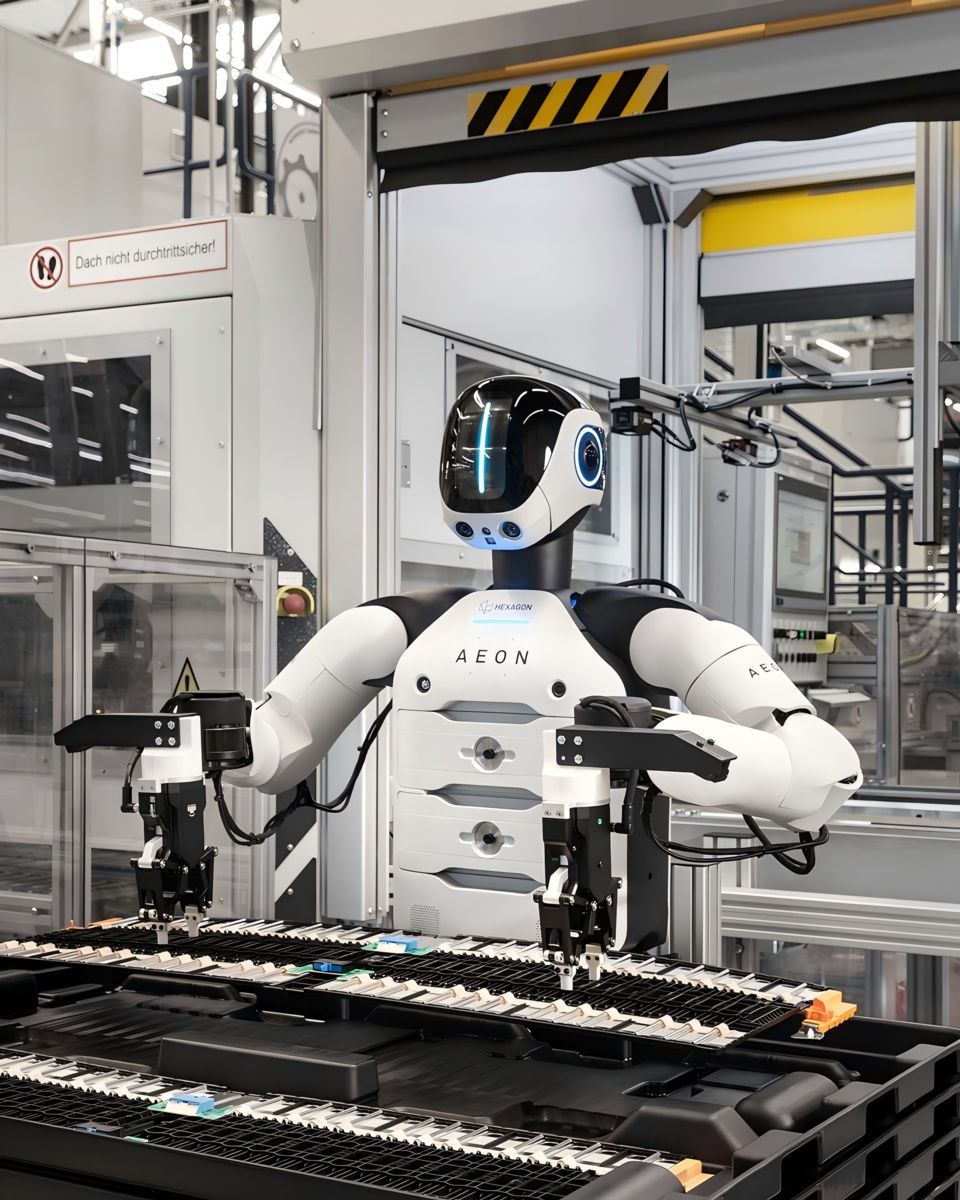
During the battery assembly and component manufacturing trials at BMW’s Leipzig plant, the DH-ROBOTICS AG Series Electric Grippers undertake key manipulation tasks and demonstrate strong industrial-grade performance.
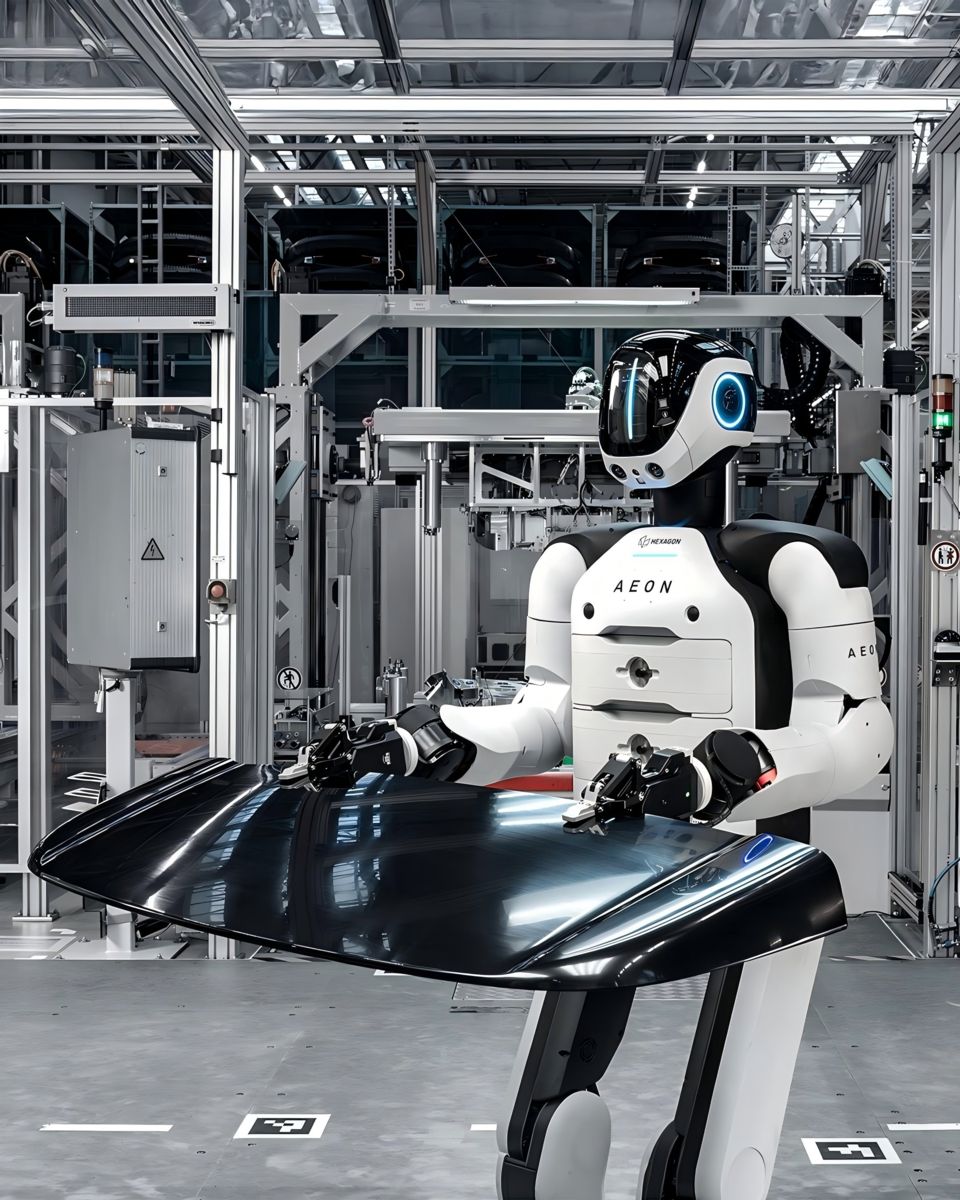
The AG Series features an adaptive enveloping gripping structure, enabling stable handling of workpieces with various shapes and sizes. Combined with a long stroke, high repeatability, flexible adaptability, and plug-and-play integration, the grippers can be quickly integrated with different humanoid robot platforms and operate reliably under complex production rhythms.
This deployment highlights the AG Series’ reliability in high-precision, high-consistency industrial scenarios, while reflecting DH-ROBOTICS’ long-term expertise in industrial electric end-effector development and application.
Industrial Experience Empowering Embodied Intelligence
DH-ROBOTICS
The humanoid robotics industry is transitioning from the stage of “being able to move” to “being able to work.”
Walking and balancing solve mobility challenges, but real industrial deployment depends on operational stability, control accuracy, and system reliability.
Successful operation in demanding industrial environments demonstrates both the adaptability of humanoid robots and the reliability of the AG Series electric grippers in complex production tasks.
End effectors are not merely structural components of humanoid robots—they are critical elements that determine whether robots can perform practical tasks on production lines.
The advancement of embodied intelligence in industrial applications must be built on long-term experience in industrial automation, including precision motion control, force-control algorithms, and system stability.
Leveraging years of experience in industrial electric actuators, DH-ROBOTICS integrates mature industrial technologies into humanoid robot applications, providing robust support for the execution layer of embodied intelligence.
Conclusion
The humanoid robot pilot at BMW’s Leipzig plant represents an important step for embodied AI within European automotive manufacturing.
As humanoid robots begin participating in battery assembly and component manufacturing processes, the industry is entering a phase of higher-standard industrial validation.
Moving forward, the stability and reliability of execution capabilities—especially end-effector technology—will become key factors determining the large-scale deployment of humanoid robots in manufacturing.
Back to Exhibitor News Privacy Settings